How to Change your Chainring

Earlier this year, I decided to switch my bike from the original 2×10 drivetrain that was on it to a more simple 1×10 setup. This has made my shifting much simpler since I  no longer need to take into account where the front derailleur is before shifting. On top of that, it clears out some of the clutter on my bars and allows my left hand to focus simply on braking and using my dropper post.

Since switching my setup, I’ve been curious to try an oval chainring. I recently found a deal on one that I couldn’t pass up. So here is my experience installing a new AbsoluteBlack oval chainring.

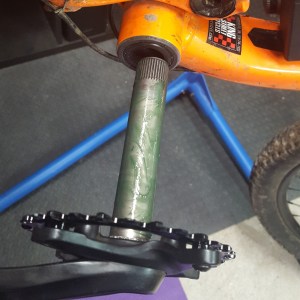
This specific how-to is focused on the process for a Shimano M615 crankset.

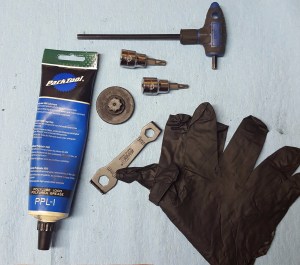
What you’ll need:

Chainring tools.jpg

  • Your new chainring (make sure it will fit your cranks)
  • Grease
  • A rubber mallet (your palm will work as well)
  • Correct chainring bolts for your setup
  • 5 mm allen key (I also needed a t25 and T30 Torx wrench)
  • Chainring nut wrench

How To:

Here are the steps to follow if you are wanting to install a new chainring on your bike. The same steps also apply to if you want to remove/change a multiple chainring setup. All you need to do is repeats steps 4 and 5 until you have replaced all of your chainrings.

Step 1

preload cap removal.jpg

Start by removing the crank preload cap on the non-drive side using the small plastic tool.

Step 2

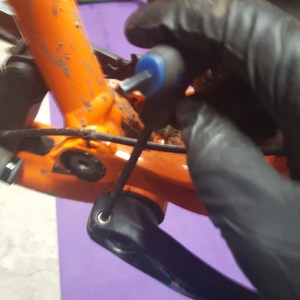
removing cranks.jpg

Undo the two pinch bolts holding the crank on

Step 3

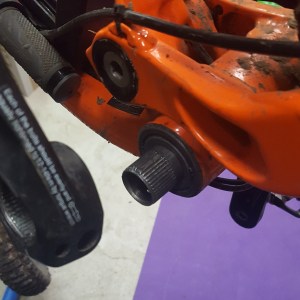
20171119_134224.jpg

Remove the crank using your palm or a rubber mallet to lightly tap it. You can now push the crank assembly through the bottom bracket to remove it.

Step 4

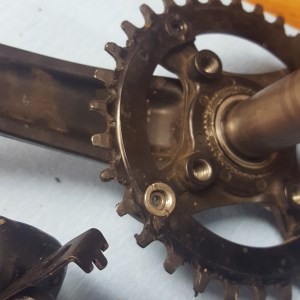
20171119_131829.jpg

Step 4: Remove the chainring bolts. Use the chainring nut wrench to hold the nuts in place.

Step 5

20171119_133041.jpg

Line up the new chainring. Slightly screw in each bolt to ensure it is properly positioned before tightening each fully.

Step 6

20171119_134010.jpg

Re-grease your crank assembly and reinstall it. Start with the preload cap then alternate between the pinch bolts every half turn to ensure they are evenly tensioned.

Stay tuned for my first impressions of riding this oval chainring!
 

Tubeless Tires: A Newbie’s Guide

Ever since I upgraded my mountain bike, I’ve been toying with the idea of switching to tubeless tires. I’ve always run fairly low pressures with my tubes and surprisingly have never had an issue, so switching to tubeless was more for the insurance factor rather than fixing a problem I faced. The other day I decided to get over my fear and get started. Here is my experience.


What you’ll need

  • Tubeless Ready Tires
    • My bike came with a Maxxis Minion DHR front tire and a Maxxis Crossmark II rear tire, both of which are Tubeless ready
  • Tubeless Conversion Kit OR Sealant and Valves with removable cores
    • The rims I have were not tubeless ready, so I bought the full conversion kit, which came with:
      • Two valves with removable cores
        • Two large rubber gaskets
        • Two small rubber gaskets
      • A bottle of sealant
      • Two alcohol swabs
      • Rim tape
  • Soapy water
  • An air compressor (or some quarters and a local gas station)

The Process

  1. Remove your wheel from your bike and deflate your tube/tire.
    • Seems obvious right?
  2. Remove your tire and tube
    • Captain obvious reporting for duty… again
  3. Remove the rim strip20170502_145405.jpg
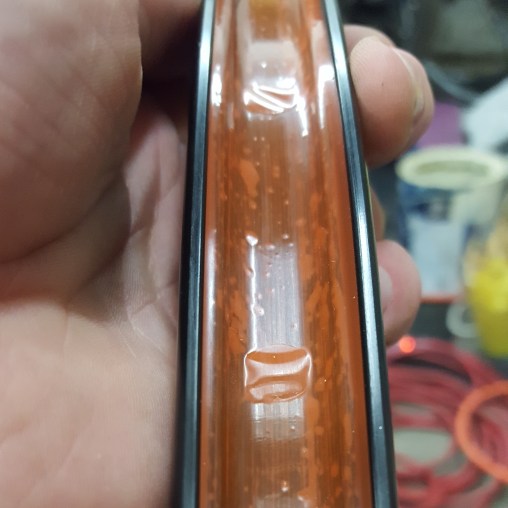
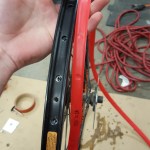
    • Your rim should have a narrow nylon strip protecting your tube from your spokes. This looks kind of like rim tape, but it is not air-tight. Peel it off of your rims to allow the rim tape to properly seal to your rim
  4. Clean your rim and tire
    • Make sure you get all the dirt and grime off of your wheel. I used soapy water on both the tire and the rim followed by using the alcohol swab on the inside of the rim
  5. Put a layer of rim tape around the inside channel of your rim
    • There’s competing ideas around this. Some people say to 20170502_152041.jpgstart at the valve hole, while others say to start at the weld of your rim (directly across from the valve hole). I started at the weld and have not had any issues with it sealing properly.
    • Either way, you want to put one layer of tape around the entire interior of your rim, removing as many air bubbles as possible, and overlapping by a couple centimetres where you started.
  6. Cut a slit for the valve
    • Put two small cuts in the tape where the valve hole is to allow the new valve to poke through.
  7. Put in the valve20170502_152511
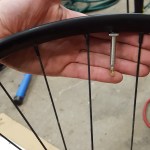
    • The valve should have two different sized rubber gaskets that help seal the whole it creates. Place the large gasket between the valve and the inside of the rim, and the small one on the outside of the rim before tightening the nut to hold the valve in place.
  8. Put your tire back on the rim
    • Take a second to make sure the tire’s bead is nice and clean before popping it back on the rim by hand. *MAKE SURE THE TIRE IS FACING THE RIGHT WAY*
  9. Remove the valve core
  10. Add 4 oz. of sealant
  11. Rotate the tire to get sealant everywhere
  12. Inflate the tire until you hear the bead pop into place
  13. Swirl the tire to allow the sealant to circulate
  14. Enjoy your nice low pressures and added grip!

Tips

  • Make sure your tire is facing the right way!
    • I was so proud of myself for getting my tire on and seated on my first try that I failed to notice that I had put it on backwards. If you can’t figure out which direction your tire should face, most tires have a directional arrow printed on the sidewall
  • Ensure your beads are spotless.
    • When I tried to reseat the tire I accidentally put on backwards, I forgot to properly clean the sealant that was on the bead. This lead to me wasting about $5 in quarters down at the gas station air compressor wondering why it wouldn’t seat properly. Sure enough, once I cleaned the bead it seated first try!
  • For that extra clean look, line up the logos of your rim with the logos on your tire.

Hope this newbie’s guide has helped you get your bike one step closer to the perfect bike you’ve always dreamed of! Let me know if you have any tips that have helped you during this process.

Basic Rear Derailleur Knowledge

If there is one thing that confused me most about my bikes at first, it was how the rear derailleur works. Let’s shine some light on this mysterious piece of tech, shall we?

What do all these screws do?

On first glance, the derailleur is this mysterious piece of metal with screws sticking out of it all over. For basic maintenance, you really only need to know two of them. Let’s break down what each of them controls!

High Limit Screw

Usually marked with an H, this screw controls how far away from the wheel the derailleur can go. Turning it counter-clockwise pushes the derailleur further out while turning it clockwise allows the derailleur to rest closer to the wheel.

Low Limit Screw

Usually marked with an L, the low limit screw controls how close the derailleur can get to the wheel. If it pulls too close to the wheel, it can pull the chain off the inside. This can lead to a lot of cursing in frustration as you wrestle it out, or worse, broken spokes. Turning it counter-clockwise pushes the derailleur further out while turning it clockwise allows the derailleur to rest closer to the wheel.

Adjusting your cable tension

Seems simple right? Well, it is and it isn’t. There are actually two parts that can adjust your cable tension. The first, most obvious, is used to make large adjustments. To adjust this: shift into your highest gear, loosen the screw that clamps the cable, pull the cable finger tight, and retighten the screw!

The second way is using the barrel adjuster, which will generally be located on your front shifter or directly attached to your derailleur. The barrel adjuster is used to make small adjustments to your cable tension, mainly during indexing, which we will get into next time.

Tune in next time, when we take a closer look at how to use all of this to ensure your shifting remains buttery smooth!